

Your Pap Smear Was Abnormal. What Happens Next?
An abnormal Pap is not a cervical cancer diagnosis. But you deserve to understand what the result means—and what should happen from here.
Maybe your patient portal simply says abnormal.
Maybe the report includes unfamiliar terms such as ASC-US, LSIL, ASC-H, HSIL, or AGC.
Maybe your HPV test is positive too.
Or maybe someone has already told you that you need a colposcopy, but you still do not understand what they are looking for or how concerned you should be.
An abnormal Pap smear can mean several different things. Some results call for repeat testing. Some need a closer examination of the cervix. Some raise greater concern for cervical precancer than others.
The appropriate next step depends not only on the word printed on your newest report, but also on your HPV result, previous cervical screening, age, and other relevant history.
We help women put those pieces together.
Abnormal Pap and HPV evaluation in Chattanooga — no membership required.
First: An Abnormal Pap Does Not Mean You Have Cervical Cancer
A Pap test is a screening test.
It looks for changes in cells collected from the surface of the cervix. When those cells do not look completely normal under a microscope, the result is reported as abnormal.
That does not automatically mean you have cervical precancer.
And it does not mean you have cervical cancer.
Some abnormal results reflect mild HPV-related changes that may resolve. Others suggest a greater possibility that a precancerous area could be present and should be evaluated more closely.
The Pap result helps estimate risk. It does not by itself provide the same information as a cervical biopsy.
That is why the next question is not simply:
“Is my Pap smear abnormal?”
It is:
“What kind of abnormality was found, and what does it mean in the context of my complete history?”
Read ACOG's Patient Guidance

What If My HPV Test Is Positive?
High-risk HPV causes almost all cervical precancers and cervical cancers.
But a positive HPV test does not mean you have cancer.
HPV is extremely common, and many infections become undetectable without ever causing a significant cervical lesion. What matters is whether a high-risk HPV type is present, whether it persists, whether HPV16 or HPV18 was identified, what the Pap shows, and what your previous screening history looks like.
For example:
– An HPV-positive result with normal cytology may lead to repeat testing or colposcopy, depending on the HPV type and previous history.
– ASC-US with a positive HPV test carries a different level of risk from ASC-US with a negative HPV test.
– HPV16 or HPV18 generally receives particular attention because those types are more strongly associated with cervical precancer and cancer.
– Persistent high-risk HPV matters more than treating every positive result as though it means the same thing.
The Pap and HPV results should be interpreted together.
Learn More About HPV & Pap ResultsModern cervical screening management is based on risk, not simply on one test result.
Current recommendations consider the combination of your newest result and the history that came before it. That means two women with the same Pap wording may reasonably receive different recommendations.
-
UNDERSTAND THE CURRENT RESULT
What did the Pap and HPV tests actually show?
ASC-US, LSIL, ASC-H, HSIL, and AGC are not interchangeable. Neither are a negative HPV test, a positive pooled high-risk HPV test, HPV16, or HPV18.
We start with the actual laboratory reports rather than relying only on a phone message or a portal notification that says “abnormal.”
-
UNDERSTAND THE HISTORY
What happened before this result?
A first minor abnormality after a recent negative HPV-based screening test may carry less risk than the same result after persistent HPV or several years of abnormal testing.
Previous Pap tests, HPV results, colposcopies, cervical biopsies, and treatments all help establish the context.
-
UNDERSTAND THE PATIENT
What other factors affect the recommendation?
Age, pregnancy, immune status, previous cervical treatment, symptoms, and the ability to complete appropriate follow-up may all matter.
The goal is not to make the result sound less important or more frightening than it is.
The goal is to estimate the risk accurately enough to choose a safe next step.
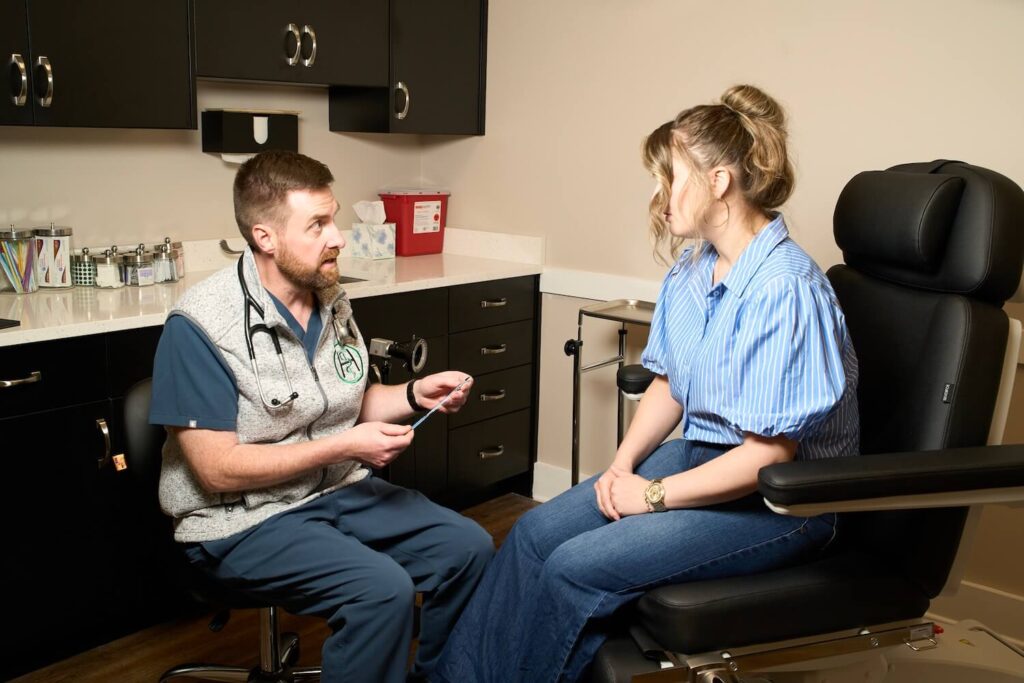
Do I Need a Colposcopy?
Maybe.
Colposcopy is commonly recommended after results such as ASC-H, HSIL, AGC, certain HPV16 or HPV18 results, or other combinations that cross the guideline threshold for further evaluation.
It may also be recommended after persistent lower-grade abnormalities or when previous history increases your estimated risk.
But not every abnormal Pap requires colposcopy.
If your clinician has already recommended one, we can help you understand why. If you have only received the laboratory result and are unsure what should happen next, start with that result.
You do not need to diagnose yourself before contacting us.
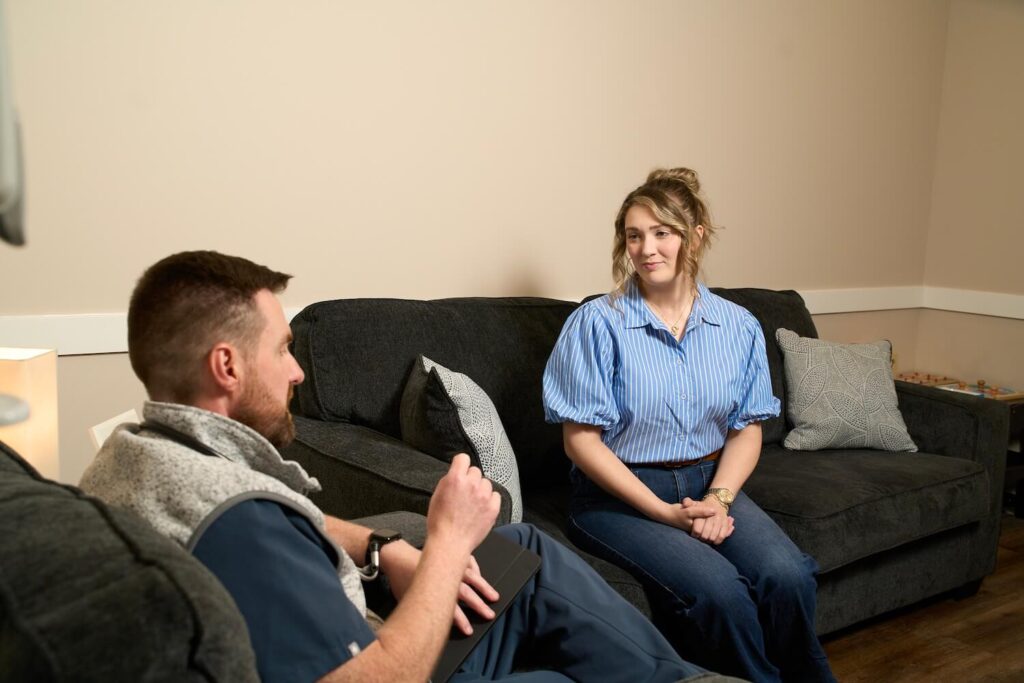
Abnormal Pap Evaluation in Chattanooga
If you live in Chattanooga, southeast Tennessee, or the surrounding region, Beyond the LEEP provides focused evaluation of abnormal cervical screening results.
Depending on your situation, we may be able to help with:
– Review of your Pap and HPV reports
– Review of previous cervical screening and treatment history
– Cervical dysplasia consultation or second opinion
– Colposcopy and directed cervical biopsy when indicated
– Endocervical sampling when appropriate
– Explanation of pathology results
– Follow-up planning after colposcopy
– Evaluation of persistent or recurrent abnormalities
– Discussion of treatment options if CIN2 or CIN3 is diagnosed
– Referral when another type of specialist care is needed
You do not need to be a Hitchcock Family Medicine member.
You do not need a referral to contact us.
And you do not need to know whether you need a consultation, colposcopy, or another type of appointment before you start.
Bring us the result. We will help determine the next step.
Get More Information
What If I Live Outside Chattanooga?
You should not have to travel hundreds of miles simply to receive routine follow-up that can be provided well close to home.
Many first-time or low-risk abnormal Pap results can be managed appropriately by a local primary care clinician or gynecologist.
But a focused cervical dysplasia evaluation may be useful when:
– You do not understand why a procedure has been recommended
– Your Pap, HPV, colposcopy, and biopsy results do not seem to agree
– You have had repeated abnormal results or persistent high-risk HPV
– You have been diagnosed with CIN2, CIN2-3, or CIN3
– You have been told you need a LEEP and want to understand the recommendation
– You have already undergone cervical treatment and another result is abnormal
– You are concerned about preserving cervical tissue for a future pregnancy
– You want to know whether another medically reasonable option exists
– You have had a difficult or painful colposcopy and need another evaluation
We welcome women traveling from outside Tennessee and across the country for cervical dysplasia consultation, second opinions, colposcopy, and selected treatment options.
Whenever possible, start with the records you already have before making travel arrangements. Reviewing those records helps us understand what may need to happen in person and whether traveling is likely to add meaningful value.
Traveling to Chattanooga for CareAbnormal Pap & HPV Evaluation Pricing
Consultation / Second Opinion
$350
A consultation may include review of your available Pap, HPV, colposcopy, pathology, and previous treatment records; assessment of the complete cervical history; explanation of your estimated risk; and a plan for appropriate next steps.
Colposcopy
$350 + pathology fees
Pathology fees are usually approximately $50–$150, depending on the number and type of specimens submitted.
When you contact us, start with your results. Our team will help determine which type of visit is likely to be appropriate.
You do not need to be a Hitchcock Family Medicine member.
Members receive additional discounts on cervical dysplasia services.
Your Result Says “Abnormal.” You Do Not Have to Figure Out the Rest Alone.
You do not need to know which kind of appointment or treatment you need before contacting us.
If you have an abnormal Pap or HPV result, have been told you need a colposcopy, or simply do not understand what the report means, start with the information you already have.
We will help you understand:
– What the result actually says
– How HPV and previous screening affect the interpretation
– How concerned you should be
– Whether repeat testing, colposcopy, another evaluation, or referral is appropriate
– What should happen next
You bring the results.
We will help you understand what comes next.
Start with your resultsWritten and medically reviewed by Matthew Hitchcock, MD
Board-Certified Family Physician
Last reviewed: August 26, 2026



Have cervical dysplasia results and not sure what comes next?
You do not need to know exactly what kind of appointment or treatment you need before contacting us.
If you have an abnormal Pap or HPV result, need a colposcopy, have been diagnosed with CIN1, CIN2, or CIN3, have been told you may need a LEEP, or want a second opinion about your options, start with the results you already have.
Our team will review your request and help you understand the appropriate next step.