

CIN2 or CIN2-3: Do I Need a LEEP?
A high-grade cervical dysplasia diagnosis deserves treatment or close follow-up. But understanding exactly what your biopsy means matters before deciding what comes next.
If your cervical biopsy showed CIN2, CIN2-3, or high-grade squamous intraepithelial lesion (HSIL), you may have been told that the next step is a LEEP.
LEEP is a highly effective treatment for cervical dysplasia, and sometimes it is clearly the right choice.
But not every high-grade biopsy result means exactly the same thing.
CIN2 can sometimes be managed with careful observation in appropriately selected patients. CIN3 should be treated. And a pathology report that says CIN2-3 often reflects uncertainty about exactly where a lesion falls along that spectrum.
That distinction matters.
Before deciding what comes next, we want to understand the pathology, what was seen during colposcopy, your previous cervical history, and what matters to you.
What does CIN2-3 actually mean?
CIN stands for cervical intraepithelial neoplasia.
It describes abnormal cells in the surface lining of the cervix, usually caused by persistent high-risk HPV infection.
CIN2 and CIN3 are both considered high-grade cervical precancers.
They are not cervical cancer.
But they are not identical diagnoses.
CIN2
CIN2 represents moderately abnormal cervical cells. Some CIN2 lesions persist or progress, while others regress as the immune system controls the HPV infection.
Because regression can occur, careful observation rather than immediate treatment can be reasonable for some appropriately selected patients.
CIN3
CIN3 represents more advanced precancerous change and carries a greater risk of eventually progressing to cervical cancer.
CIN3 should be treated.
CIN2-3
Real-world pathology does not always fit neatly into one category.
A biopsy may be reported as CIN2-3, HSIL/CIN2-3, or high-grade squamous intraepithelial lesion that cannot be more precisely graded.
When CIN3 cannot be excluded, current guidelines generally favor treatment.
That does not make understanding the diagnosis any less important.
It makes it more important.
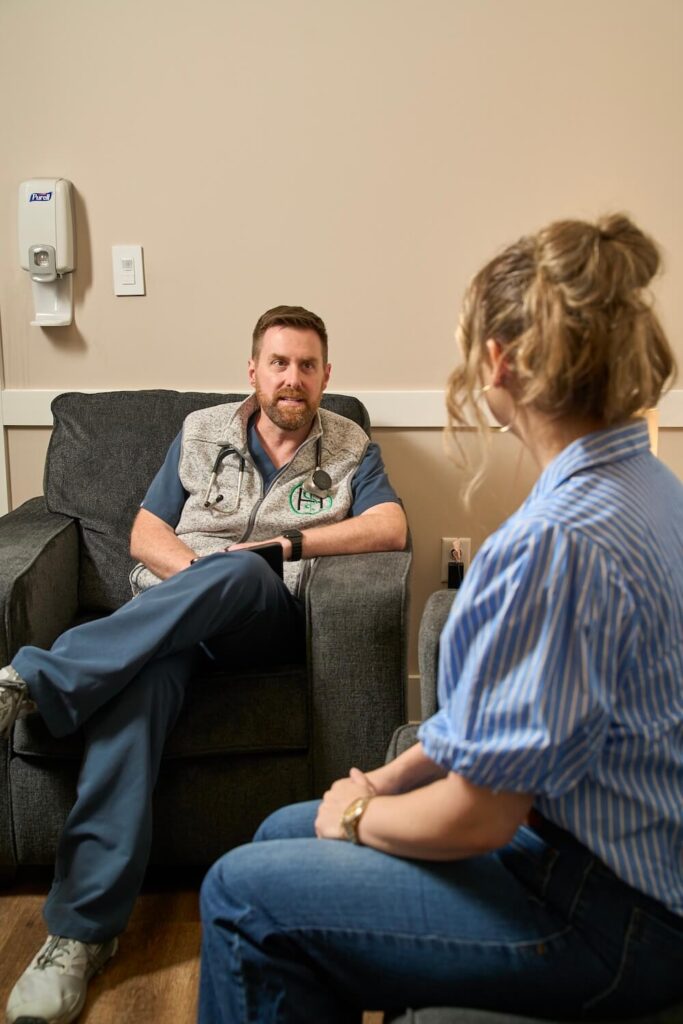
A pathology result is a diagnosis. It is not a treatment plan.
Two women can have similar biopsy reports and reasonably need different conversations about what comes next.
A second opinion does not necessarily mean recommending something different.
Sometimes the most valuable second opinion is understanding why the original recommendation is the right one.
The appropriate options depend heavily on whether the lesion is clearly CIN2, CIN3, or cannot be confidently distinguished between the two.
-
CLOSE OBSERVATION
Sometimes reasonable for CIN2
Current guidelines allow careful observation of CIN2 in appropriately selected patients, particularly when concerns about the effects of treatment on a future pregnancy outweigh concerns about cancer.
Observation is not the same as doing nothing. It requires structured follow-up with repeat colposcopy and HPV-based testing, generally at six-month intervals.
Observation is only appropriate when the cervix can be adequately evaluated, endocervical findings are reassuring, and reliable follow-up is possible.
If CIN2 persists or the findings become more concerning, treatment may be recommended.
-
LEEP OR OTHER EXCISIONAL TREATMENT
Highly effective — and sometimes clearly the right choice
LEEP removes the abnormal transformation zone and provides a larger tissue specimen for pathology examination.
That has two important advantages: it treats the abnormal tissue, and it allows the pathologist to examine the removed tissue more completely than is possible with a small cervical biopsy.
LEEP may be particularly important when CIN3 is present or cannot be excluded, when the lesion cannot be completely evaluated, when abnormalities extend into the cervical canal, when high-grade disease persists, or when obtaining an excisional specimen is important to exclude more significant disease.
Sometimes, after reviewing everything, our recommendation will be a LEEP.
Our goal is not to avoid appropriate treatment. It is to make sure you understand why you are having it.
-
IMIQUIMOD
A nonsurgical option for selected patients
For some women who strongly prefer to avoid removing cervical tissue, imiquimod may also be worth discussing.
Imiquimod is an immune-response medication that has been studied in randomized clinical trials as a nonsurgical treatment for CIN2 and CIN3.
Its use for cervical dysplasia is off-label and is not currently standard U.S. guideline-based treatment for cervical HSIL.
However, published studies demonstrate regression of high-grade dysplasia and HPV clearance in a meaningful proportion of treated women.
Whether imiquimod is reasonable to consider depends on the grade of dysplasia, cervical examination, previous history, and your individual goals.
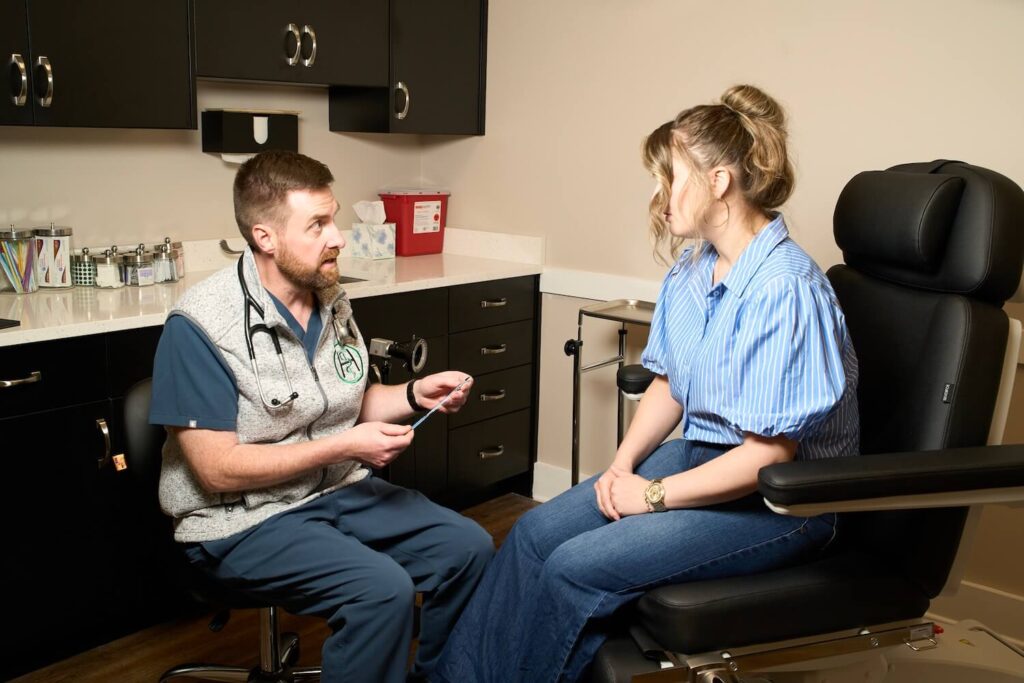
Why does future pregnancy matter?
LEEP is highly effective, and most women who undergo a LEEP can become pregnant and have healthy pregnancies.
But LEEP works by removing cervical tissue.
Research has associated cervical excisional procedures with an increased risk of some future pregnancy complications, particularly preterm birth, and that risk appears to be influenced by the amount of cervical tissue removed and repeated procedures.
That does not mean someone who wants children should avoid a LEEP when treatment is needed.
But when more than one medically reasonable approach exists, preserving cervical tissue may be an important consideration.
This is one reason current guidelines specifically incorporate concerns about future pregnancy into shared decision-making for CIN2.
What if my report says CIN2-3?
This is an important distinction.
A report of CIN2-3 generally means the biopsy contains high-grade dysplasia that cannot be confidently classified as CIN2 rather than CIN3.
Because CIN3 cannot be excluded, management is generally more cautious than it would be for a clearly established CIN2 diagnosis.
That may make excisional treatment the preferred recommendation.
But you should still understand:
- What the pathology actually showed
- Whether the entire lesion was visible during colposcopy
- What endocervical sampling showed
- Whether there are previous abnormal results
- Whether pathology review might add useful information
- Why a particular treatment is being recommended
A second opinion is not about finding someone who will tell you that you do not need treatment.
It is about making sure the diagnosis and recommendation make sense together.

CIN2 / CIN2-3 Second Opinion
$350
If you have been diagnosed with CIN2, CIN2-3, or cervical HSIL and have been told you need a LEEP, we can review the complete picture with you.
Your evaluation may include:
- Review of available Pap and HPV results
- Review of cervical biopsy and pathology reports
- Review of previous colposcopy and treatment records
- Discussion of previous cervical procedures
- Discussion of future pregnancy goals
- Assessment of your individual risk factors
- Colposcopic evaluation when appropriate
- Discussion of observation, LEEP, imiquimod, or other reasonable options
- A clear plan for what happens next
You do not need to be a Hitchcock Family Medicine member.
START WITH YOUR RESULTS
Were You Told You Need a LEEP?
You do not need to decide what treatment you want before contacting us.
If your biopsy says CIN2, CIN2-3, HSIL, or CIN3, start with the results you already have.
We can help you understand what they mean, what additional information matters, and what reasonable options exist from there.
The goal is not to avoid a LEEP.
The goal is to make sure the treatment fits the disease—and the patient.
Start with your resultsWritten and medically reviewed by Matthew Hitchcock, MD
Board-Certified Family Physician
Last reviewed: August 26, 2026



Have cervical dysplasia results and not sure what comes next?
You do not need to know exactly what kind of appointment or treatment you need before contacting us.
If you have an abnormal Pap or HPV result, need a colposcopy, have been diagnosed with CIN1, CIN2, or CIN3, have been told you may need a LEEP, or want a second opinion about your options, start with the results you already have.
Our team will review your request and help you understand the appropriate next step.